Systems integration, automation and software for businesses in India
Based in Bangalore and working with businesses across India that need their systems connected, their manual work automated, or software built around how they operate.
GST e-invoicing and e-way bills from your own system
Generating e-invoices and e-way bills directly from the ERP or accounting system, instead of keying invoice data into government portals by hand.
02
Tally connected to everything else
Orders, invoices and payments from the website, marketplaces and sales teams flowing into Tally or another accounting system without re-entry.
03
Marketplace and D2C order consolidation
Orders from your own store and marketplaces arriving in one place, with stock kept in step across every channel.
04
WhatsApp-led customer operations
Order confirmations, delivery updates and service requests through the WhatsApp Business API, connected to the systems that hold the order.
05
Replacing spreadsheets with real systems
Internal tools for approvals, field work, inventory or service management, built for how the team actually works.
06
Growing past the first software
Businesses whose processes have outgrown the tools they started with and need a plan, not just another subscription.
Why work with someone based in Bangalore
Some of the most valuable work in a systems project happens in the room: watching how orders are really processed, where the spreadsheets live and which steps people work around. Being based in Bangalore makes it straightforward to spend that time on site when a project needs it, while the build itself runs remotely and efficiently.
How I work with businesses in India
A project starts with a conversation, then a short discovery exercise that maps how information moves between your systems today and where it breaks. Delivery runs in stages, each one tested with realistic data and reviewed with you before it touches live operations. You have one accountable point of contact who understands both the business requirement and the technical work.
Connect the software your business already uses so information moves between systems reliably, without re-keying, spreadsheets in the middle or manual reconciliation.
Find the repetitive, error-prone work in your operations, simplify the process, then automate it with clear rules and a defined place for human judgement.
Connect your ecommerce website with inventory, ordering, payments and back-office systems, so online sales run through operations without manual handling.
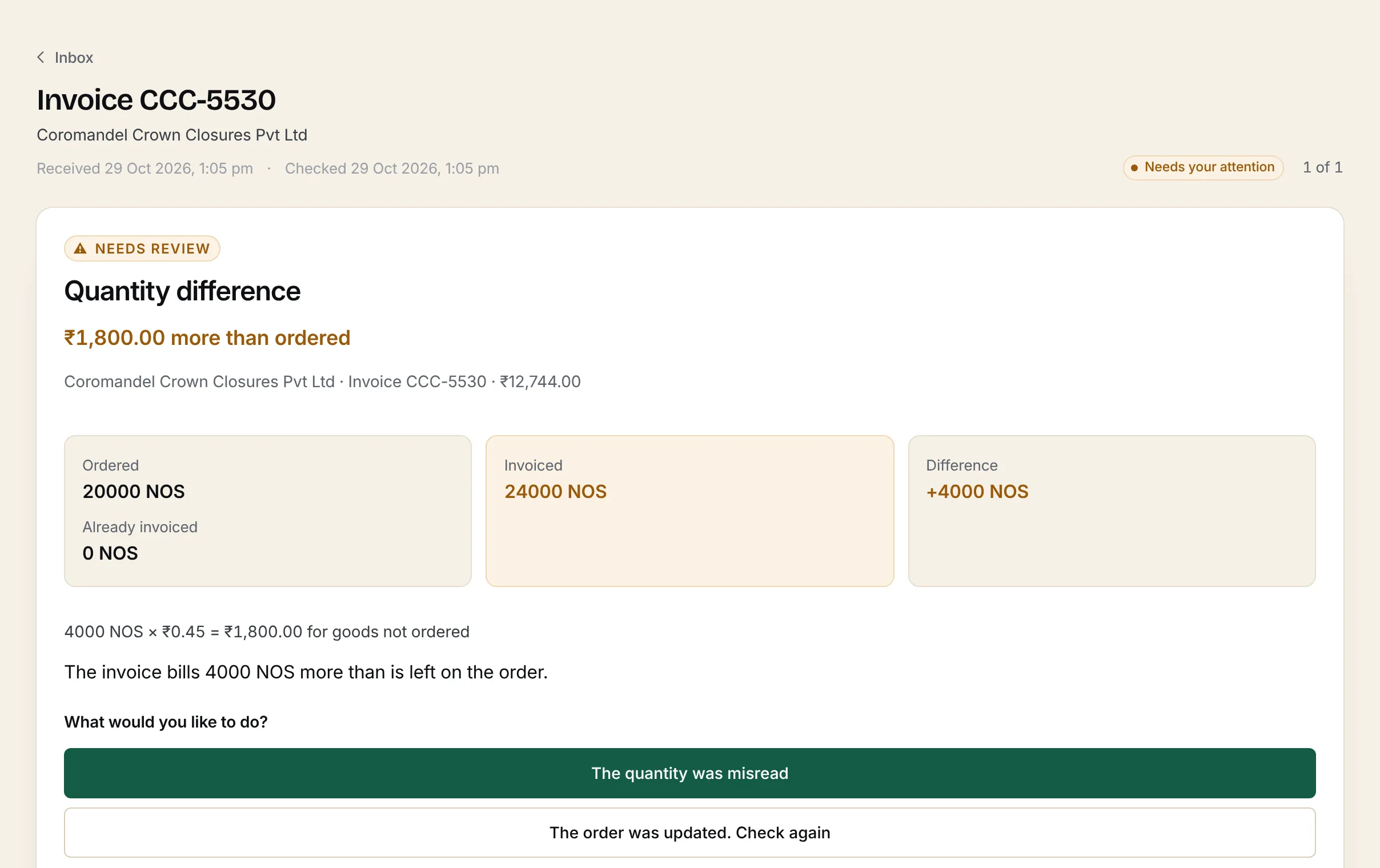
My own product for verifying supplier invoices. It reads invoices, checks them against purchase orders, goods receipts and supplier records, and asks a person when something does not match.
A provider-side platform built for iDine to deliver and manage services for iDine's clients, covering customer accounts, departments, teams, categories and issue routing.
A WordPress website revamp for a fruit distribution business in the UAE, with planned and in-progress integration across ecommerce, inventory, ordering and payments.
Read the case study →
FAQ
Questions from India businesses
Where are you based?
In Bangalore. I work hybrid, with day-to-day delivery happening remotely and site visits when a project needs them, for example for discovery workshops, process walk-throughs or a go-live.
Do you work with businesses outside Bangalore?
Yes, across India. Most of the work runs remotely, and site visits are arranged when they add value.
Can you integrate GST e-invoicing with our ERP or accounting software?
Yes, on the systems side. That means checking what your software supports, connecting it to the e-invoicing system directly or through a provider, and setting up how errors are handled. Tax advice stays with your chartered accountant.
Do you work with Tally?
Tally is one of the most common systems in India, and connecting other systems to it is a typical integration project. The first step is always checking what your Tally setup can exchange, rather than assuming.
Have an operational problem worth solving?
Tell me what is slowing your team down and which systems you use today. You do not need a technical specification: describing the problem is enough to start.