Client project for iDine
OpsFirst
A provider-side platform built for iDine to deliver and manage services for iDine's clients, covering customer accounts, departments, teams, categories and issue routing.
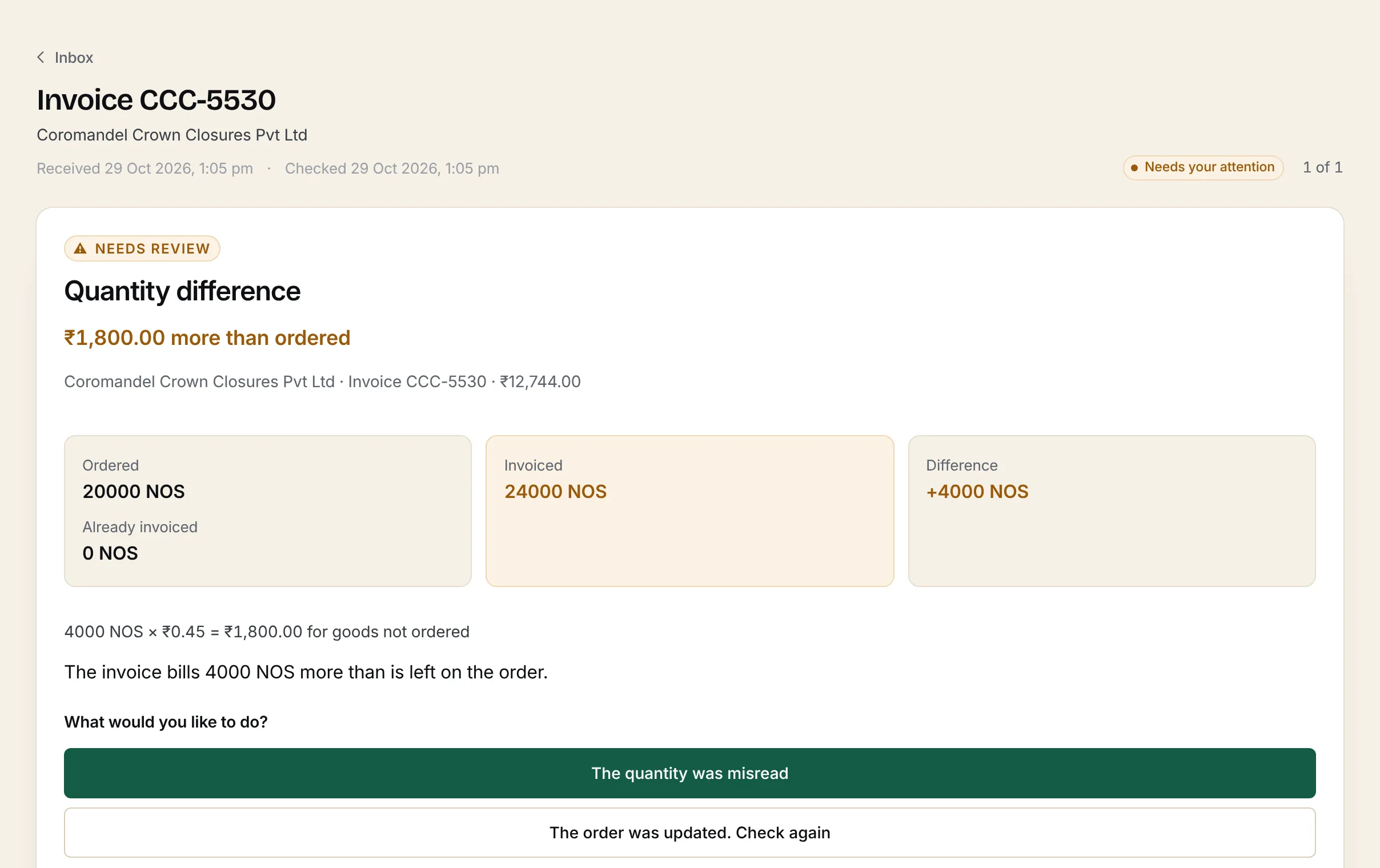
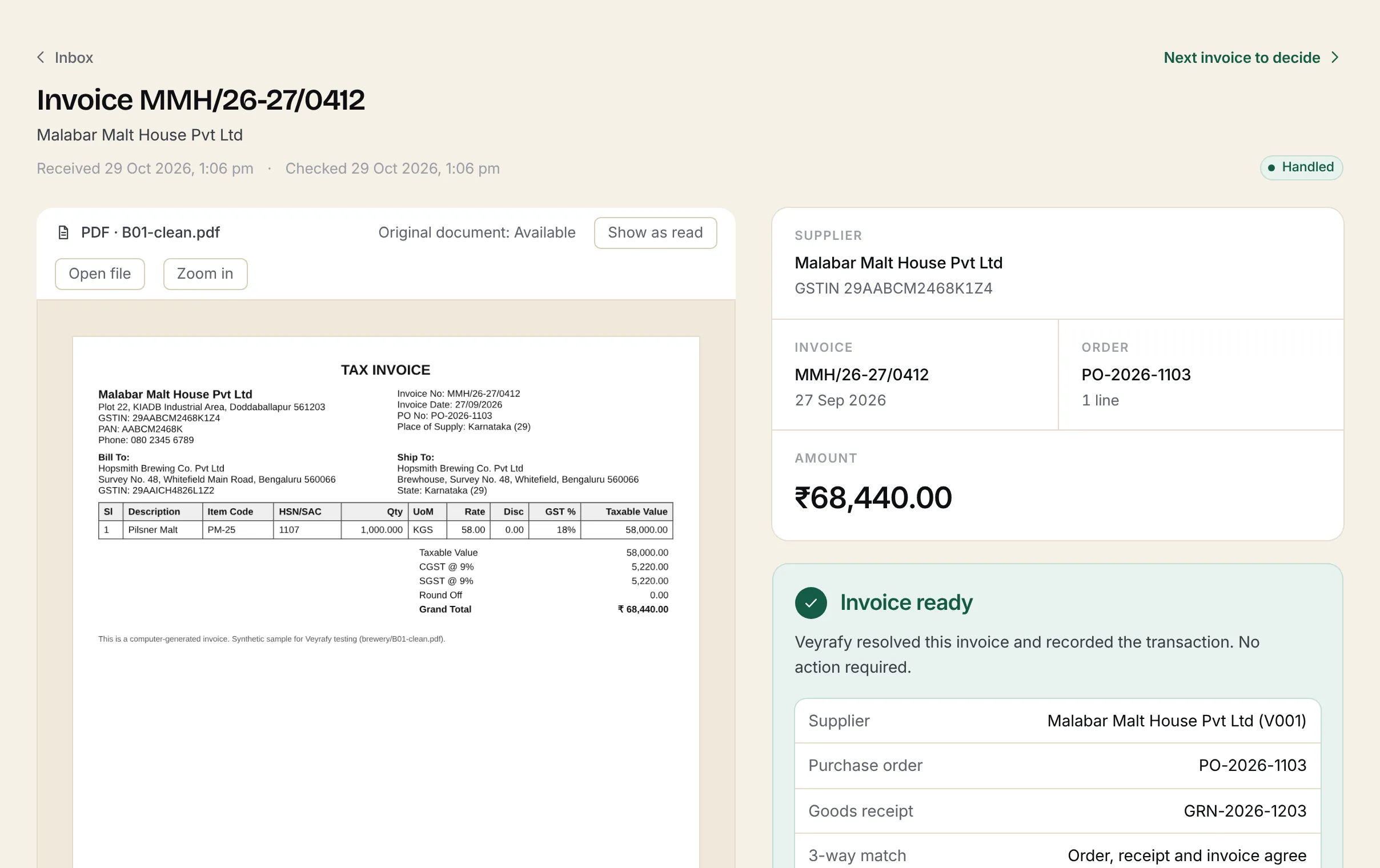
Read the case study →My own product for verifying supplier invoices. It reads invoices, checks them against purchase orders, goods receipts and supplier records, and asks a person when something does not match.
Finance teams check supplier invoices against purchase orders, goods receipts and supplier records before they can be paid. The work is repetitive and slow, and mistakes are expensive: duplicate payments, payments for goods never received, or prices that differ from what was agreed.
Veyrafy takes a supplier invoice from upload to a clear outcome: verified and ready for the business’s own payment process, or held with a specific question for a person to answer.
The workflow is: read → find → use → validate → ask a person when uncertain. The principle is that the system never guesses. If information is unclear or does not match the business records, it becomes a question rather than an assumption.
Veyrafy is in active development. To be precise about what is and is not proven:
Veyrafy is my product. I defined the problem, the business rules and the product, and lead its design, architecture and delivery using AI-assisted development.
Client project for iDine
A provider-side platform built for iDine to deliver and manage services for iDine's clients, covering customer accounts, departments, teams, categories and issue routing.
Read the case study →Confidential clientIn progress
A WordPress website revamp for a fruit distribution business in the UAE, with planned and in-progress integration across ecommerce, inventory, ordering and payments.
Read the case study →My own product
My own operations management SaaS product. It helps businesses log operational issues, give each one an owner and a response target, escalate what is overdue and keep a record of the work.
Read the case study →Tell me what is slowing your team down and which systems you use today. You do not need a technical specification: describing the problem is enough to start.